


Introduction
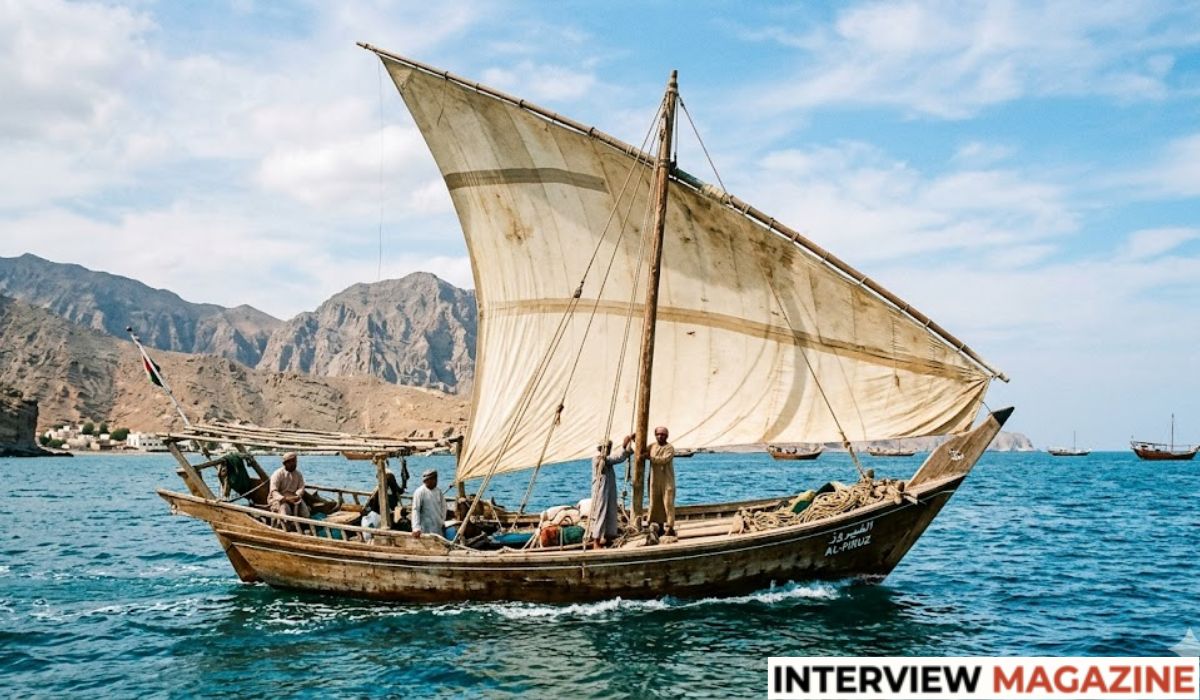
The lateen sail is not a person, but in the lineage of maritime technology, it is often regarded as the “Mother of Modern Navigation.” While a square sail can only catch the wind from behind, the lateen sail, a triangular sail set on a long yard mounted at an angle on the mast is a sophisticated aerodynamic tool. It allowed vessels to “tack” or sail against the wind, a breakthrough that fundamentally altered the course of human history. Emerging prominently in the Mediterranean and the Indian Ocean, the lateen sail became the heartbeat of the Islamic Golden Age and the catalyst for the European Age of Discovery.
The brilliance of the lateen sail lies in its versatility. It operates on the same principle as a modern airplane wing, creating a pressure differential that pulls the boat forward even when the wind is coming from the side. This innovation liberated sailors from the whims of seasonal trade winds, allowing for more precise coastal navigation and the establishment of complex maritime trade routes. From the swift dhows of the Arabian Sea to the nimble caravels of Portugal, the lateen sail was the engine of cultural exchange, moving not just spices and silk, but ideas, religions, and technologies across vast oceans. Today, it remains a symbol of elegant engineering and the enduring human spirit of exploration.
Lateen Sail | Profile Table
Career Highlights
-
The Caravel: Enabled Portuguese explorers like Vasco da Gama to reach India.
-
The Islamic Golden Age: Facilitated the vast trade networks of the Abbasid and Fatimid Caliphates.
-
The Mediterranean Galley: Provided maneuverability for trade and warfare for centuries.
-
Modern Yachting: The foundational logic of the lateen sail evolved into the Bermudan rigs used in contemporary sailing.
Early Life and Origins
The “infancy” of the lateen sail is a subject of intense debate among maritime archeologists. While long believed to have been an Arab invention, recent evidence suggests its proto-forms appeared in the late Roman Empire. In its earliest stages, the lateen was a modification of the traditional square sail, tilted to allow for better performance in the Mediterranean’s fickle winds. By the 6th century, the triangular shape had become standardized, appearing on small Byzantine craft.
As it moved into the Red Sea and the Indian Ocean, the design was perfected by Arab shipwrights. They elongated the yard and utilized lightweight, durable materials, creating the “settee” or “dhow” rig. This version of the lateen was essential for navigating the monsoon-driven waters of the East. Unlike the heavy, lumbering ships of northern Europe, these early lateen-rigged vessels were sleek, fast, and capable of hugging coastlines or darting into shallow harbors, making them the premier choice for merchants and explorers alike.
The Educational Evolution of Design
The development of the lateen sail was not an accident but a product of rigorous “educational” trial and error. Navigators had to understand the physics of lift long before the Wright brothers. The lateen sail operates as a vertical wing; as wind passes over the curved surface, it creates low pressure on one side, generating “lift” that pulls the boat forward. Mastering this required sailors to learn the complex art of “dipping the yard” maneuvering the massive wooden spar around the mast when changing direction.
This technical knowledge was passed down through generations of shipbuilders in the Levant and North Africa. It represented a shift from “passive” sailing (waiting for a following wind) to “active” sailing (manipulating the wind). This educational leap allowed for the creation of the Caravel, a ship type that combined the lateen sail’s maneuverability with the square sail’s power. It was this specific curriculum of maritime engineering that eventually allowed European sailors to venture into the open Atlantic, armed with the knowledge of how to return home against prevailing winds.
A Career Journey Across Oceans
The lateen sail’s career is one of global dominance. During the Middle Ages, it was the dominant rig of the Mediterranean, used by everyone from Venetian merchants to Barbary pirates. Its “big break” came during the 15th-century Age of Discovery. When Prince Henry the Navigator of Portugal sought to explore the African coast, his shipwrights realized that traditional square-rigged ships could not sail back north against the trade winds. They adopted the lateen sail to create the Caravel Latina.
This career move changed the world. The lateen sail powered the Nina, the Pinta, and the Santa Maria (on her mizzen mast) across the Atlantic. It allowed the Portuguese to round the Cape of Good Hope and the Spanish to establish routes to the New World. In the East, the lateen-rigged dhow remained the undisputed king of the Indian Ocean for over a millennium, transporting spices, pearls, and timber between East Africa, Arabia, and India. It was a professional tool that bridge the gap between isolated continents.
Personal Life: Cultural Integration
The “personal life” of the lateen sail is deeply intertwined with the cultures that adopted it. In the Arab world, the lateen sail is more than a tool; it is a cultural icon, synonymous with the heritage of the Gulf and the Red Sea. The sight of a white triangular sail against a sunset is a staple of regional poetry and art. In the Mediterranean, the lateen sail (or vela latina) became a symbol of local identity in places like Valencia, Malta, and Sicily.
The sail also had a “social life” in the shipyards. Building a lateen rig required specific communal knowledge selecting the right timber for the long, flexible yard and weaving the canvas to withstand high tension. While the sail itself is an object, it fostered communities of skilled laborers and brave mariners who shared a unique language of knots, winds, and currents. It lived in the hands of the people, adapting to local needs becoming shorter and sturdier for the stormy Mediterranean or longer and more elegant for the calmer Indian Ocean.
Influence and Public Image
Today, the lateen sail enjoys a public image of timeless elegance. While largely replaced by engines for commercial use, it remains a favorite for traditional racing and luxury recreation. In the 20th and 21st centuries, the lateen sail has become a “heritage brand.” From the “Sunfish” sailboat one of the most popular recreational boats in the world which uses a lateen rig to the traditional dhow races in Dubai, its influence is still felt by millions.
The lateen sail’s greatest legacy is the modern “fore-and-aft” rig used on nearly every sailing yacht today. It proved that the wind is not just a force to be pushed by, but a medium to be harnessed with finesse. Its public image transition from a tool of conquest and trade to one of sport and cultural preservation highlights its versatility. It remains a testament to an era when human ingenuity first mastered the invisible forces of the atmosphere to connect the corners of the earth.
FAQs
1. Why is it called a “lateen” sail? The term comes from the French latine, meaning “Latin,” because the Northern Europeans first encountered this triangular rig on “Latin” (Mediterranean) vessels.
2. How is a lateen sail different from a square sail? A square sail is best for sailing with the wind behind you. A lateen sail is triangular and can be angled to catch the wind from the side, allowing the boat to sail “upwind.”
3. Is the lateen sail still used today? Yes! It is widely used on traditional dhows in the Middle East, feluccas on the Nile, and on popular small recreational boats like the Sunfish.
4. Who invented the lateen sail? Its origins are debated, but it likely evolved in the Mediterranean during the late Roman period before being perfected by Arab sailors in the early Islamic era.
5. Why was it important for the Age of Discovery? Without the lateen sail, explorers could not have sailed against the prevailing winds to return home from their voyages across the Atlantic or around Africa.
6. What are the disadvantages of a lateen sail? They require a very long, heavy yard (the wooden pole holding the sail), which can be difficult to manage in very large sizes or in heavy storms compared to modern rigs.
Conclusion
The lateen sail stands as one of the most significant technological achievements in human history. Far more than a simple piece of canvas, it was the key that unlocked the oceans. By mastering the ability to sail against the wind, humanity shifted from being coastal observers to global explorers. The lateen sail did not just move ships; it moved the needle of civilization, facilitating the exchange of goods and ideas that defined the medieval and early modern worlds.
From the sun-drenched waters of the Nile to the treacherous currents of the Atlantic, the lateen sail’s silhouette has been a constant companion to the adventurous. Its legacy is found in the very map of our world, a map drawn by the captains who trusted in the triangular wing to bring them home. While we now live in an age of steel and steam, the elegant geometry of the lateen sail remains a reminder of our enduring connection to the sea. It is a symbol of a time when the world was wide, and the wind was the only engine a dreamer needed. As we look to the future of sustainable maritime travel, the principles of the lateen sail continue to inspire new generations of engineers, proving that some “mothers” of invention never truly go out of style.